In a world where large financial institutions influence the global economy, bitcoin stands out as a force for change, driving forward inclusion and diversity in the financial sector.
At its core, bitcoin represents more than just digital currency; it symbolises a departure from the age-old financial structures dominated by a few large entities and families. These gatekeepers, often criticised for consolidating wealth among the elite, have perpetuated a cycle that extracts wealth from the economically disadvantaged.
Contrary to the centralised control of traditional banking, bitcoin enables direct financial exchanges without intermediaries. It reduces transaction costs and opens up access to financial services, especially for the unbanked populations worldwide. This is not just theoretical; it's observable in real-world applications and initiatives that illustrates bitcoin's potential to revolutionise how we think about and interact with money.
Enter Fedimint and Cashu, innovative projects that reveal bitcoin's capacity to strengthen communities by equipping them with the tools to establish their own decentralised banks.
Fedimint leverages bitcoin to create a community custody and financial inclusion protocol, enhancing privacy and security for its users. By pooling their bitcoin holdings, communities can form a federated mint, operating on collective consensus. This model not only bolsters security and privacy but also instils a sense of community ownership and financial autonomy, a contrast to the hierarchical nature of traditional banking.
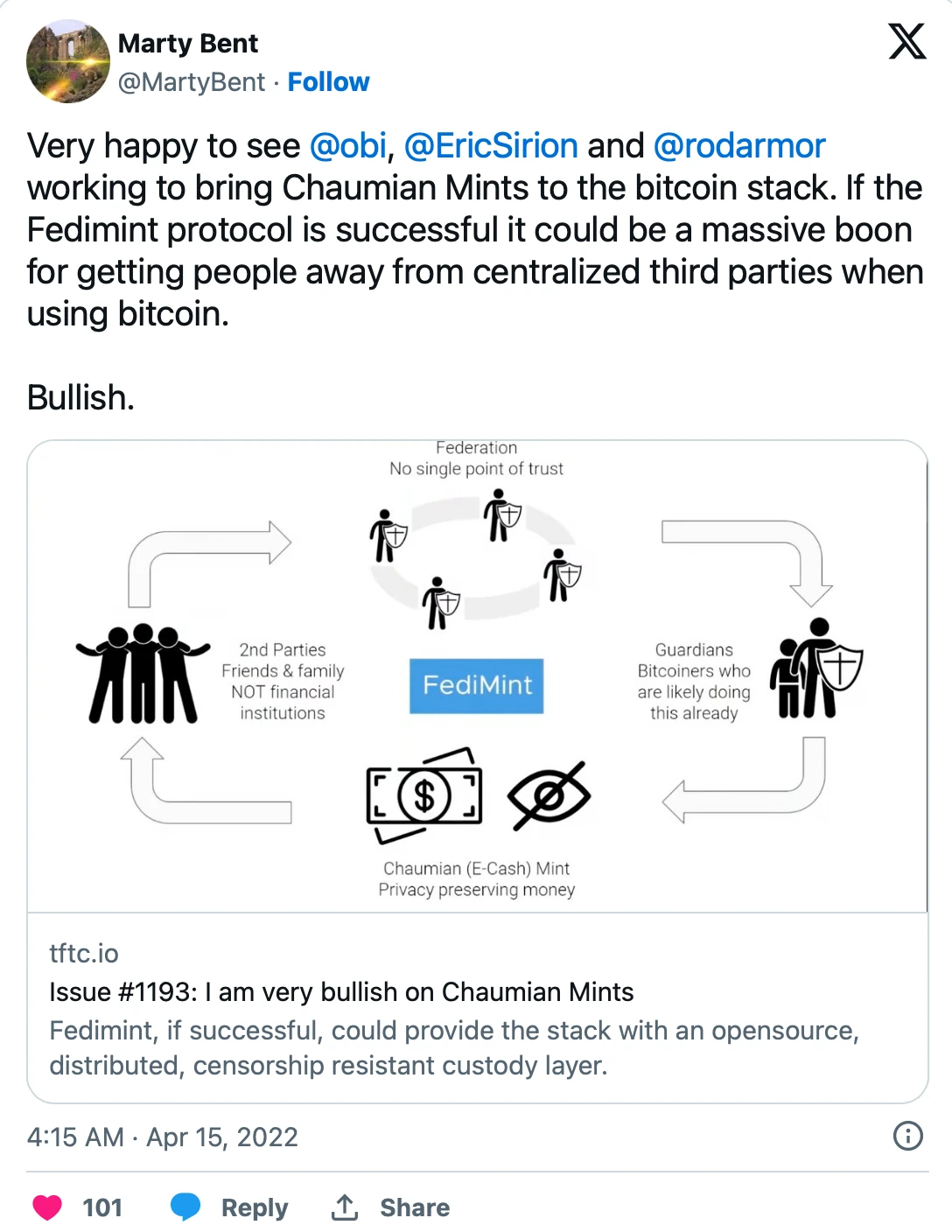
Similarly, Cashu builds on bitcoin's technology to further decentralise financial power. It provides a secure and private platform for individuals to manage and transact in digital currencies, challenging the longstanding dominance of overbearing financial institutions. Cashu and Fedimint show the move towards financial self-sovereignty, filling the void left by traditional banks that have failed to cater to the masses' needs.
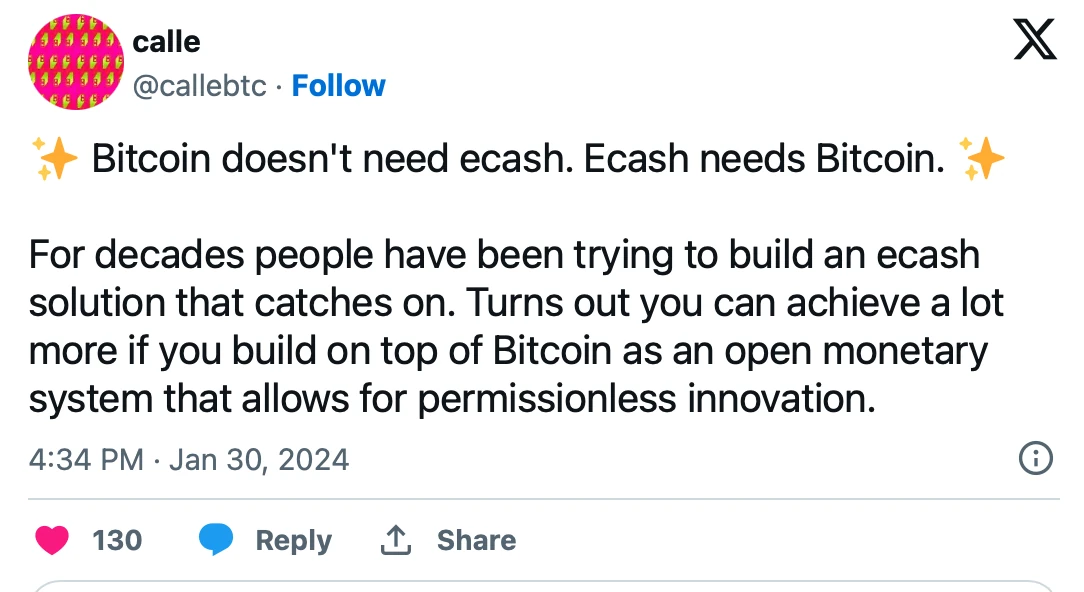
Unlike traditional cooperative bank setups, where bureaucratic hurdles and regulatory gatekeeping can limit establishment and access, Mints like Fedimint and Cashu offer a groundbreaking approach. They remove barriers imposed by paperwork, governments, or traditional banks, democratising finance in a way that allows anyone to participate. In this model, the community itself becomes the bank, representing the principles of decentralisation and collective ownership.
These initiatives stand at the forefront of a broader movement to challenge big banks and the conventional financial establishment. This signals a redistribution of power within the global economy, marking a step towards a decentralised and equitable financial future.
The impact of bitcoin extends beyond the philosophical and into the practical, especially in emerging economies plagued by financial instability and inequality. In Venezuela, for instance, bitcoin has emerged as a critical tool for citizens battling hyperinflation, offering a more stable and accessible means to preserve their savings.
Across Africa, bitcoin facilitates cross-border transactions without high fees or the necessity for traditional banking infrastructure, enabling businesses and individuals to partake in the global economy. In Lebanon, amidst severe economic distress, bitcoin provides a lifeline for individuals seeking to avoid financial restrictions and safeguard their wealth from currency devaluation.
Fedimint and Cashu represent a move away from the reliance on large corporations and towards community empowerment. Projects are driven by a desire to see the unmet needs of the people. It's a testament to the power of bitcoin and its underlying technology to effect change, not through confrontation but by creating alternatives that cater to the unbanked and underserved.
As projects like Fedimint and Cashu thrive, they don't just challenge the status quo; they lay the groundwork for a future where financial liberation and access are not privileges but rights accessible to all. The rest of the world may follow, recognising that the path to true financial inclusivity lies not within the walls of towering banks but in the collective hands of empowered communities.