Bitcoin recently experienced a huge price spike followed by an immediate retracement, triggered by a false update from the U.S. Securities and Exchange Commission account. This incident unfolded when the SEC posted that they had approved a bitcoin spot Exchange-Traded Fund, a development eagerly awaited by investors.
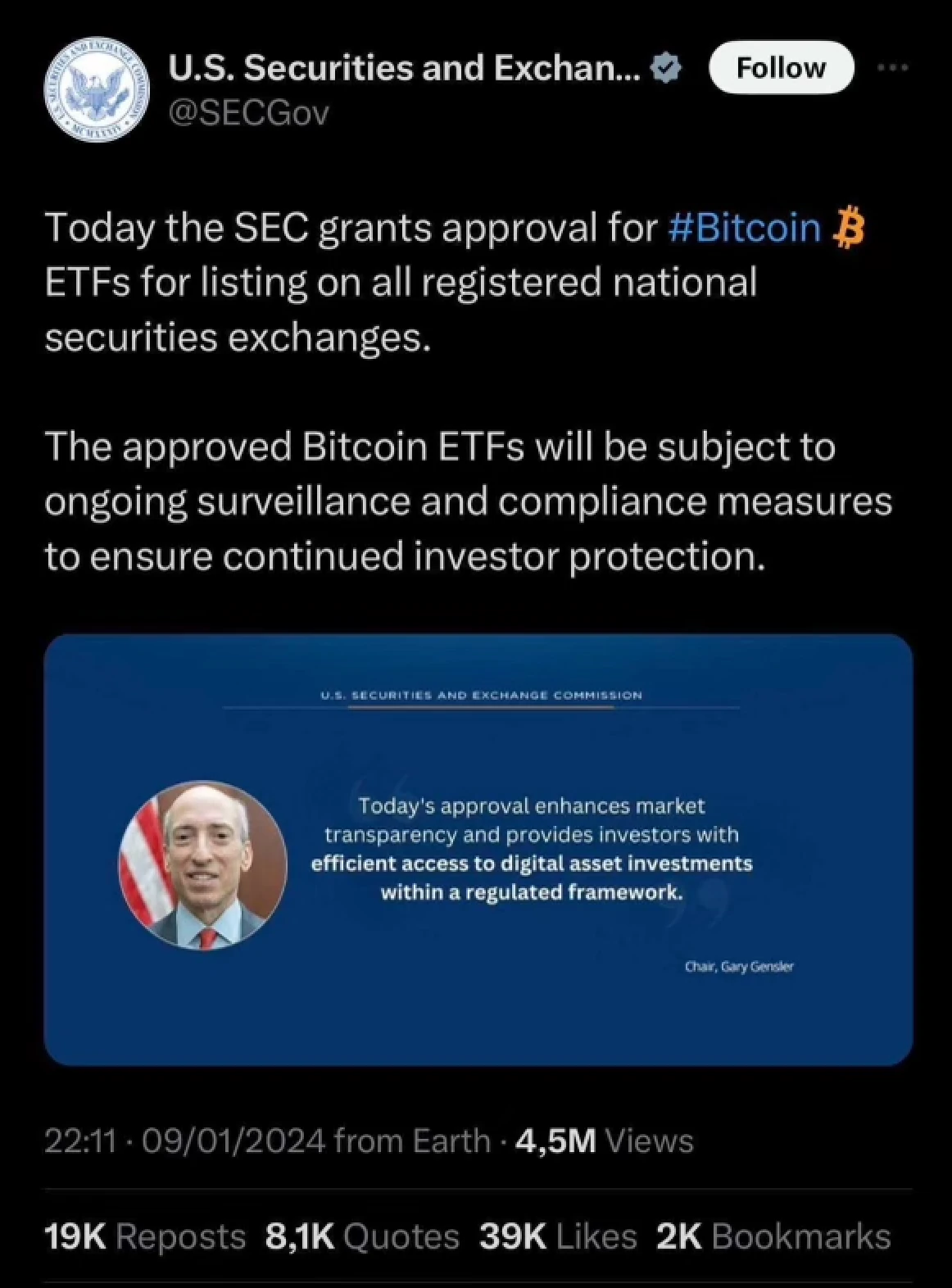
The report, later confirmed as false, caused a rapid surge in bitcoin's price, demonstrating the high responsiveness of the market to regulatory developments. However, the euphoria was short-lived. SEC Chair Gary Gensler's announcement that the commission's account on X was compromised, raised questions about the security and reliability of information spread in the digital age.
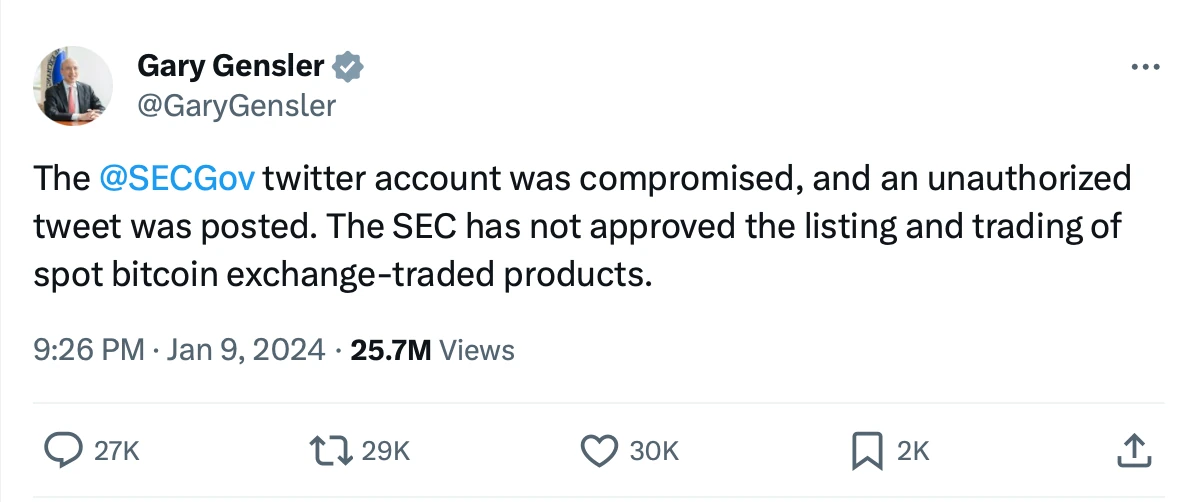
This event is not just a standalone incident but is representative of the broader issues surrounding digital assets and regulation. The false ETF approval rumour underscores an issue - the intersection of market dynamics with news, both real and fake. Where information travels at the speed of light, the authenticity and source of such news can sway markets, as demonstrated in this case.
The incident raises concerns about information security. The compromise of an official SEC account, points to vulnerabilities that can be exploited. This is noteworthy considering Gary Gensler's post on October 24, 2023 regarding cyber security:
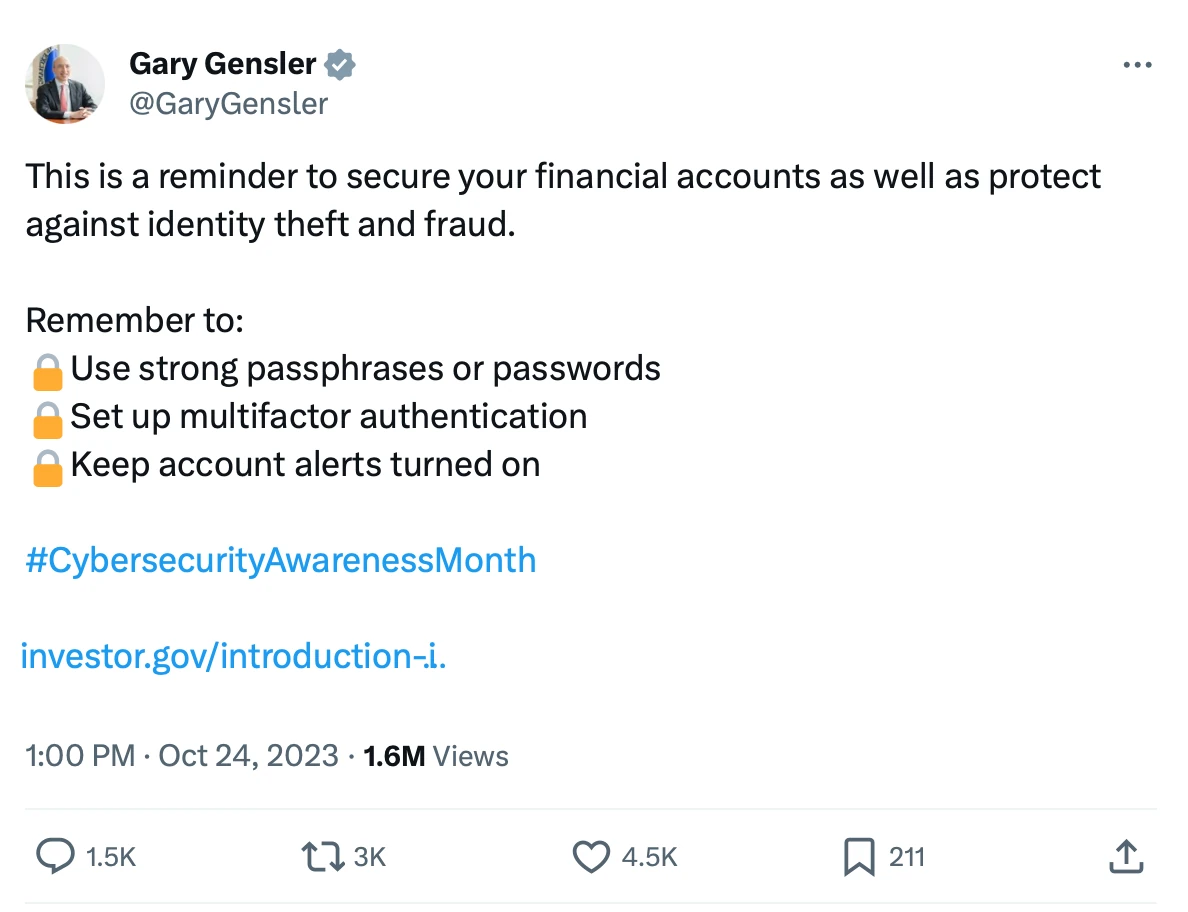
In a market as speculative and sensitive as cryptocurrencies, the impact of such actions can be profound and far-reaching, underscoring the need for heightened vigilance in cybersecurity practices.
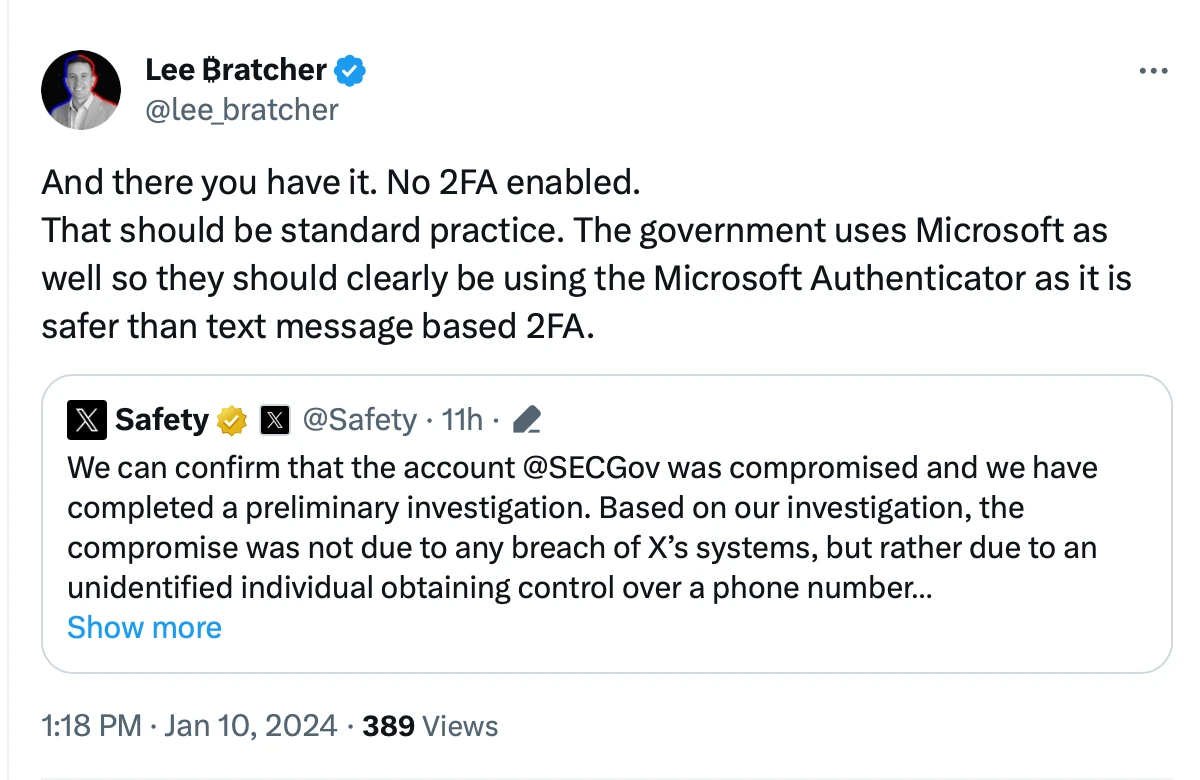
For investors and market participants, this episode serves as an important reminder of the need for caution and due diligence. Reinforcing this sentiment, the SEC posted in October:
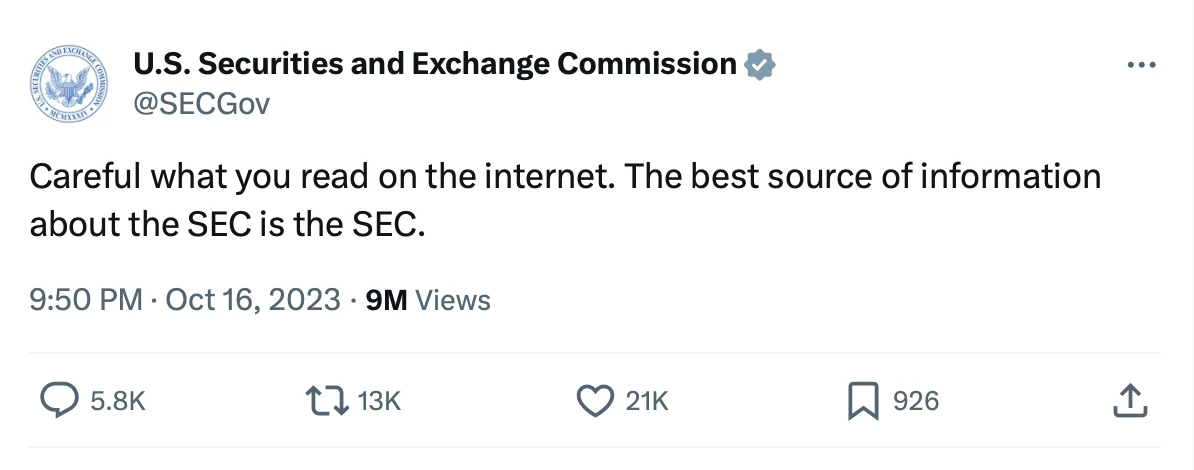
Perhaps not.
The reliance on credible sources for information, especially regarding regulatory announcements, cannot be overstated. It also highlights the need for regulatory bodies and platforms to ensure the security and integrity of their communication channels.
As the market matures and attracts more institutional and retail investors, the need for clear, accurate, and secure communication becomes paramount. Incidents like these not only affect market prices but can also erode investor confidence and hinder the path towards greater adoption.
The bitcoin market's reaction to the false SEC bitcoin spot ETF approval rumour is a microcosm of the challenges faced in the digital asset space. It underscores the importance of reliable information, the impact of regulatory news on market movements, and the ongoing need for robust security measures in digital communication.
For a market that holds immense potential and is at the forefront of financial innovation, navigating these challenges is crucial for its long-term sustainability and success. This reinforces the bitcoin mantra of 'Don't Trust, Verify,' emphasising the need for due diligence, even from trusted institutions.